A Short History of Hawaiian Leis
Leis in Old Hawaii
The leis of Old Hawaii were made of both semi-permanent materials – hair, bone, ivory, seeds, teeth, feathers, and shells; and the traditional flower and leaf leis – twined vines, seaweed and leaf stems, woven and twisted leaves, strung and bound flowers of every description.
Leis were symbols of love, of a spiritual meaning or connection, of healing, and of respect. There are many references to leis, or as the circle of a lei, being symbolic of the circle of a family, embracing, or love itself:
“Like a living, first-born child is love,
A lei constantly desired and worn.”
(Na Mele Welo, Songs of Our Heritage, (translated by Mary Kawena Pukui), (Honolulu, Bishop Museum Press, Special Publication 88, 1995): Pg 45
Many leis of Old Hawaii had religious and mythological associations. Leis made of the fragrant hala fruit are connected to both love and desire, as well as marking a transition, or passing. Many people will not wear hala-fruit leis, considering them too likely to bring about a change they don’t want, while others will wear nothing else.
We’re often asked about lei customs, especially for weddings, but the most traditional view of leis is to give and wear them for love, honor, respect, or simple enjoyment – chosen on the basis of what is symbolic to you. The traditional, and traditionally-derived leis that we carry are maile, ti-leaf, kukui nut leis, and the rare haku lei made with native flowers (although these are seldom available).
Maile was associated with Laka, the patron spirit of Hula (dance) and other spirits of Old Hawaii. Ti-leaf was (and still is) planted around dwellings to ward off malevolent spirits, stalks of ti were also used as flags of truce and peace. A lei la’i made of two ti-leaves tied at the base and worn open around the neck was worn by priests and physicians.
Leis in Modern Hawaii
Leis have remained a very visible part of island life, incorporating many plants, flowers, and techniques from the many cultures that make up present-day Hawaii. Modern lei-makers have embraced beautiful flowers from all over the world to create leis of lasting quality and beauty. Some of the most common introductions are the many varieties of orchid leis, scented flowers introduced from as far away as Mexico to India, new twining techniques from other areas of Polynesia, new seeds and nuts, and long-lasting flowers such as the Cigar (kika) flower. We now have Japanese-style money leis, Micronesian leaf leis, candy leis, and a vibrant community of people who simply enjoy the creative challenge of lei-making.
Lei-making competitions and demonstrations are common on May 1st (Lei Day in Hawaii), with the competitions often resulting in the dissemination of new techniques and ideas that find their way into the commercial market. The annual Merrie Monarch Hula Competition (April) is also an excellent event to view spectacular leis, and well as any of the the various parades, small-town to Honolulu, held at various times in the islands.
Anthuriums Standards & Buying Tips
Author: Carol Anderson, the owner of Hearts of Hawaii anthurium farm
Standard Sizing for Anthuriums
What are the classes of anthurium sizes? Hawaii Revised Statutes address the standards in a manner that makes it easy to order the best size for your arrangements. Here we paraphrase the “legalese” for classifying the anthuriums.
Fortunately, varieties can be sorted into larger categories ranging from Miniature to Extra Large. Size means the dimension of the flower, determined by averaging the length and width of the flower. Stem lengths are minimums. Our cut flowers start at the minimum length.
- Miniature Class:
Under 3 inches. Some varieties are grown only as miniatures. Stem length from 3 to 7 ½ inches.
Suggestions for use: bridal & bridesmaid bouquets, boutonniere, buttonholes, corsages, hair ornaments, bud vase, small dinner table arrangements.
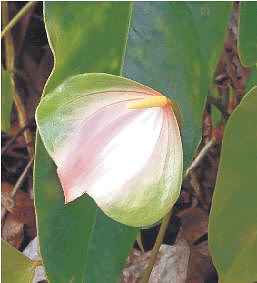
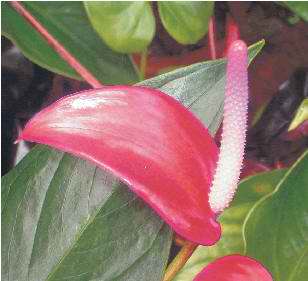
Hawaiian Butterfly and Lady Jane are usually in the miniature to small flower range. - Small Class:
Over 3 and up to 4 inches. Stem length is 4 to 10 inches.
Suggestions: bridal and bridesmaid bouquets, hair ornaments, bud vase, fill in flower arrangements of larger flowers, office desk beautification, banquet table arrangements.
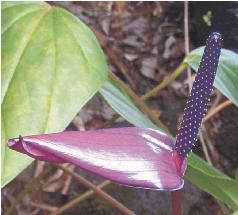
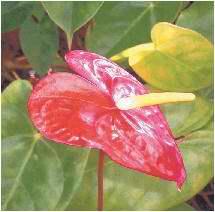
Purple ARCs and Lavender Ladys are usually miniature to small.
Kalapanas range from miniature to extra-large. - Medium Class:
Over 4 and up to 5 inches. Stem length is 5 to 12 ½ inches.
Suggestions: wedding aisle arrangements, fill in with larger flowers, banquet table arrangements, medium vase.
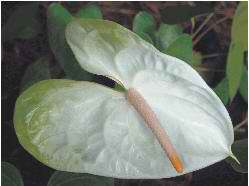
Mauna Kea Obake is medium to large - Large Class:
Over 5 and up to 6 inches. Stem length is 6 to 15 inches.
Suggestions: wedding aisle arrangements, altar arrangements, banquet tables, large vases, anytime you want to impress someone.
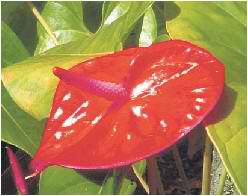
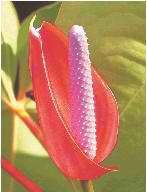
Waimeas range from medium to Extra Large. Calypsos are a tulip anthurium with
long stems in relationship to size which is small to medium. - Extra Large Class:
Over 6 inches. Stem length is 6 to 15 inches.
Suggestions for use: wedding aisle arrangements, altar arrangements, banquet head tables, large vases, great for making a “big splash” of color.